
FRAZER NASH LE MANS COUPE
Introduced in 1953, it was a development of a previous spider model, the Targa Florio, to which a roof and an opening on the more horizontal grill were added. This carriage design suggests a future model, the Sebring. It was christened Le Mans to honour the company’s performance on earlier editions of the legendary endurance competition. As a matter of fact, three different Le Mans Coupe units were to take part in the 24 Hours.
According to the Frazer Nash archives, only nine units were manufactured, including a prototype and eight production-line cars, all made between April 1953 and October 1956. Indeed, the rarity of this Frazer Nash only increases its appeal. Now available as a slot car, this model had earned an excellent reputation, and as a sports racing car, it exuded independence, speed, and panache. The rigid roof on its carriage suggests a robust appearance. It was also very innovative and elegant, among the most remarkable and attractive vehicles in this truly beautiful era of motor racing.
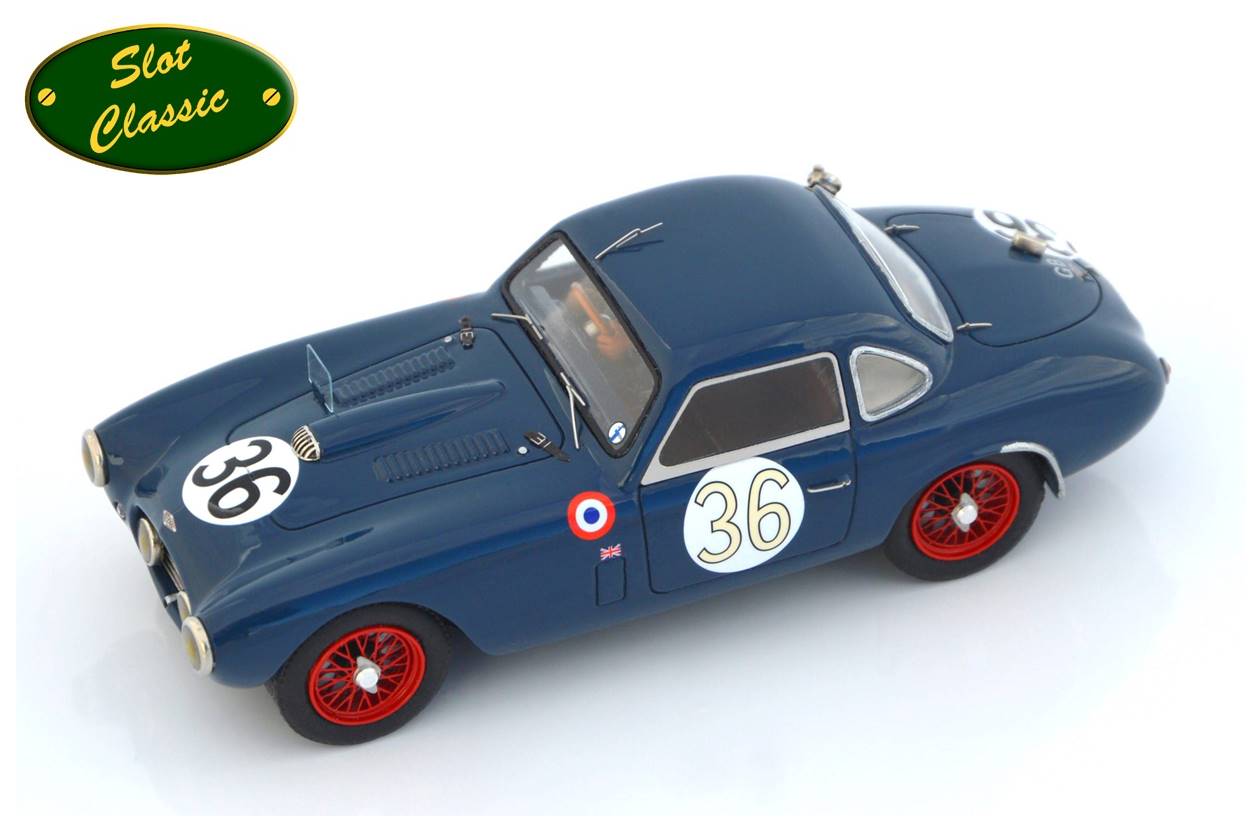
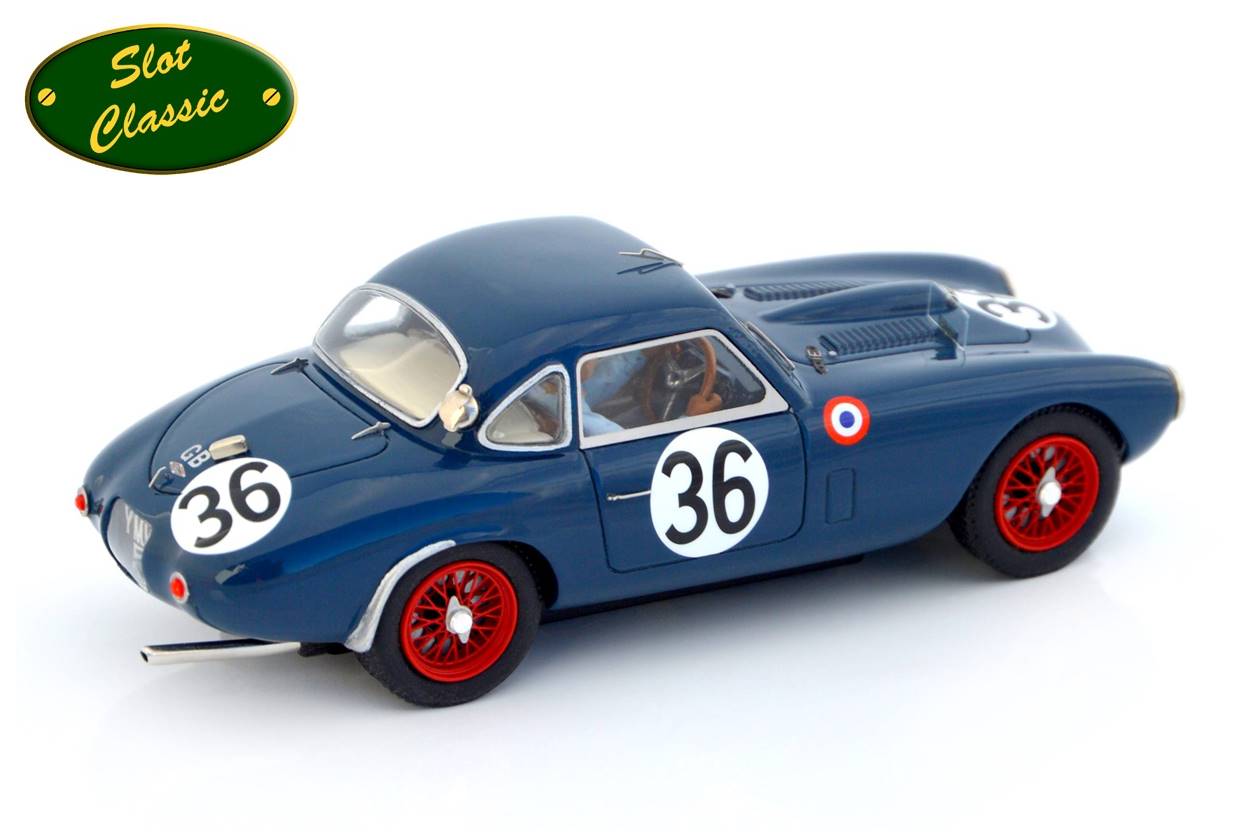
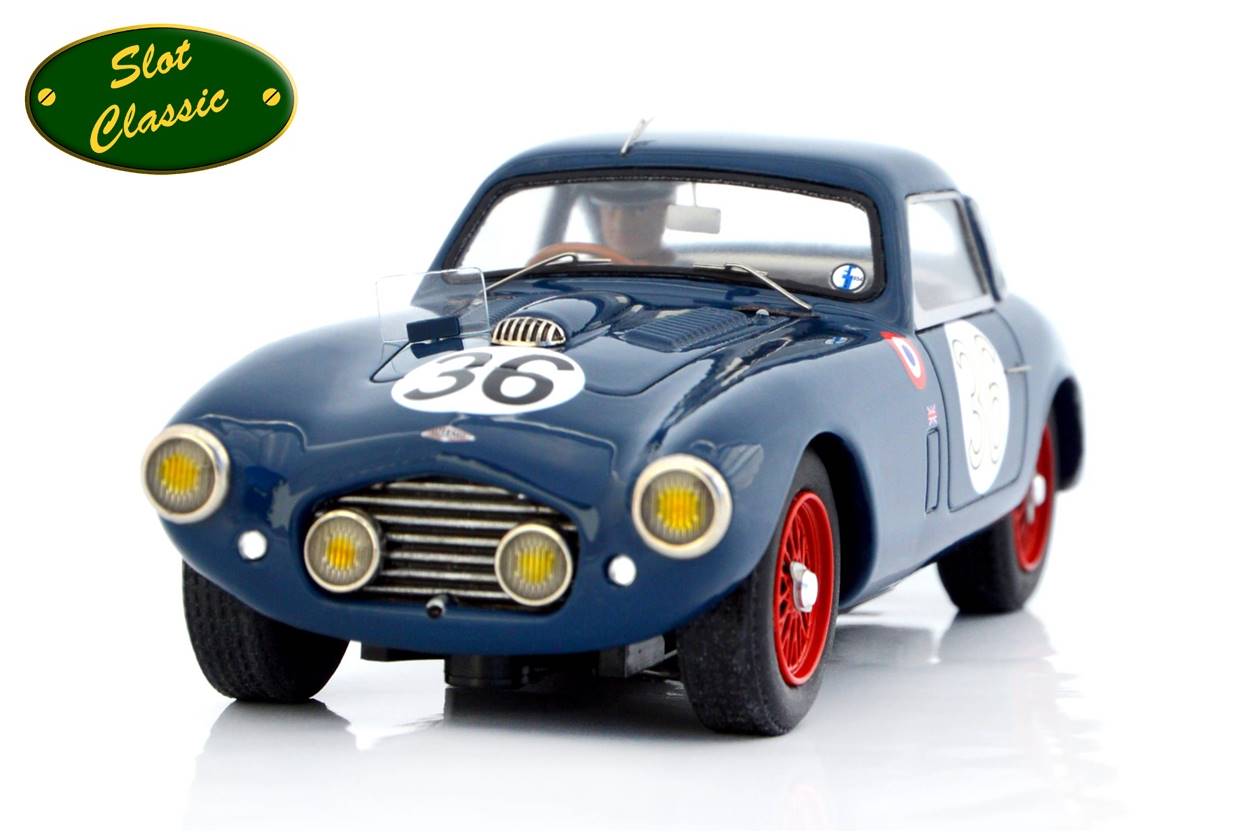
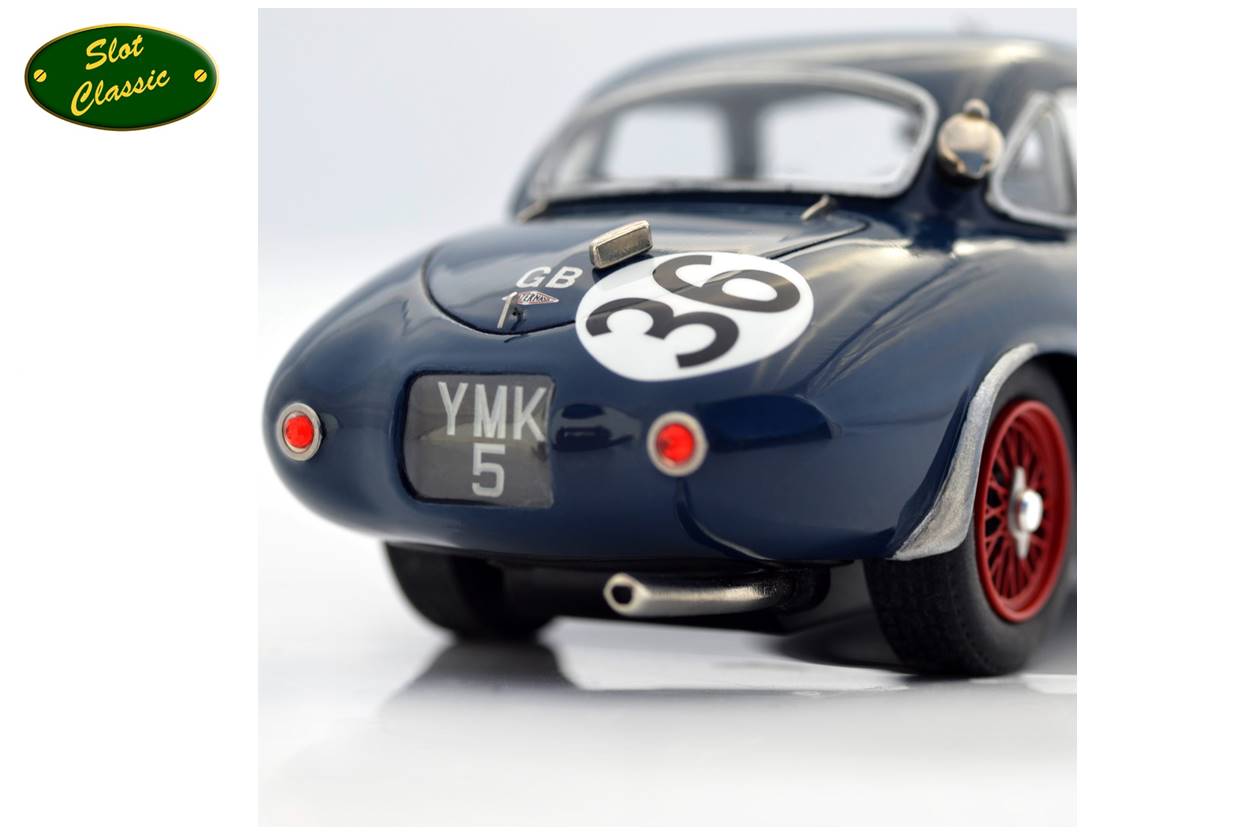
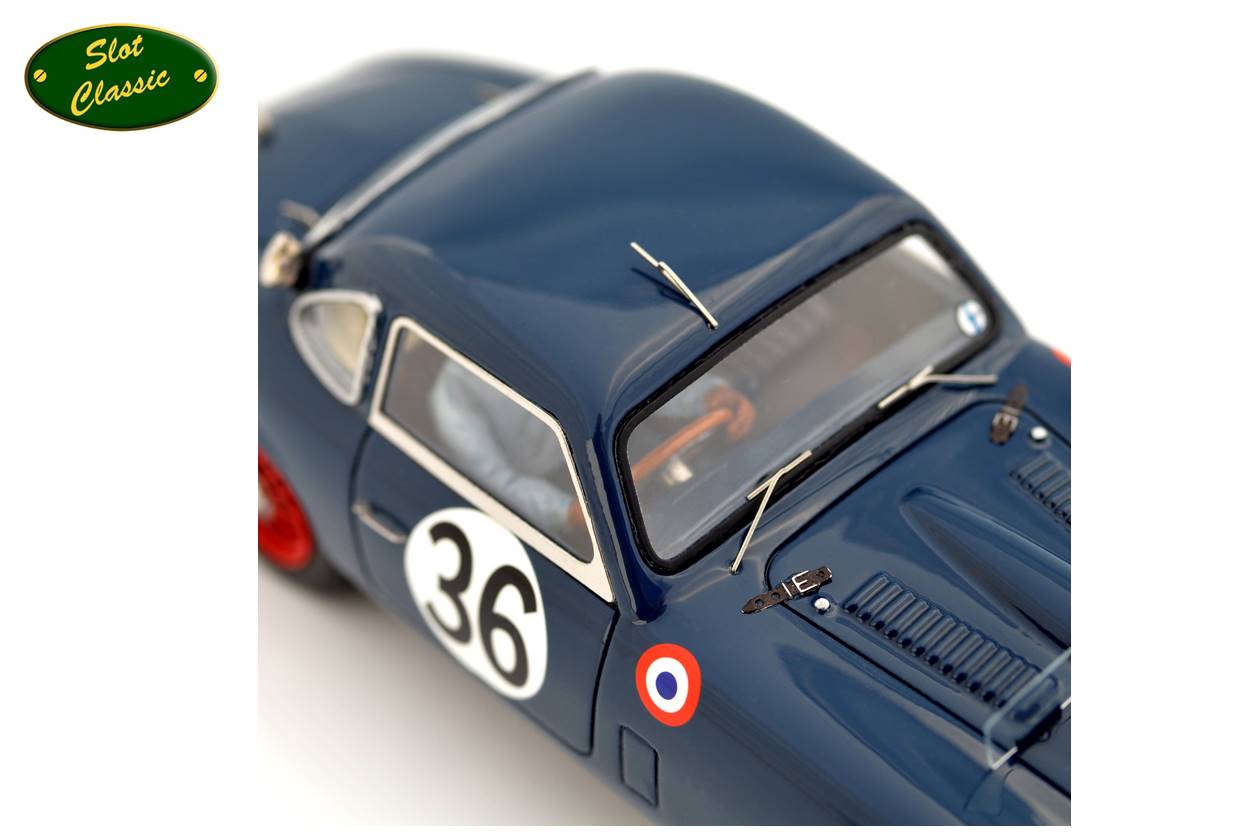
n 1954, the brand was back at Le Mans with two coupe models, numbered #36 and #38. The first of the two, chassis number 186, was returning now painted dark blue with sporting red tyres. This spectacular finish is the one we have chosen for our release, serial number CJ-56.
At any rate, their rivals in the 1501-2000 cc category were coming on very strongly, so Bristol set its three prototypes to win. Their aerodynamic design, derived from aviation technology, and a fail-proof BMW engine are the reasons for their becoming the top three winners in their category. The #36 car, a strong contender, but not as fast as the others, finished fourth after the Bristol cars..
Santiago Hernando Bartra, extract from the CJ-56 booklet.
Limited and numered edition of 400 units.